
Blog · For gyms · software, data
Best boxing gym management software in 2026
Boxing gym software compared: seven platforms for boxing clubs and studios on vendor prices, day passes and waivers at the door, and which suits your gym.
The short version: most boxing gyms run on cash and paper; 84% of the 154 boxing gym websites we crawled in August 2026 show no booking software at all. For most clubs the right first move is cheap: PushPress's free tier, or Mat Track (ours, a 7-day free trial then $49 a month, built for combat sports). Gymdesk from $75 buys simplicity, Kicksite from $49 suits traditional clubs, and the full seven are compared on verified pricing below.
Boxing earns its own version of this comparison because boxing gyms are not like other gyms. The week is built around evening sessions, the door is built around drop-ins, and the culture is built around a coach who knows everyone. Software either serves that or gets in its way. Everything below is priced from vendor pages checked in August 2026 (Mat Track's, October 2026), and the usage numbers come from our own directory of more than 11,000 martial arts gyms.
Boxing runs on cash and paper, measured
Our directory's crawl reached 154 boxing gym websites in August 2026, and 84% showed no booking or management software at all, the lowest adoption of any discipline we track and worse than the 78% average across martial arts. Among the 24 that did run something visible, no platform dominates: we found Mindbody on 7 sites, Gymdesk on 5, Zen Planner on 4, Kicksite on 3, and a scattering of others. Too few to call market share honestly, but enough to say boxing has no incumbent.
The timetable data explains the stakes. The 203 gyms scheduling boxing classes in our directory run 951 boxing sessions a week between them, about 4.7 per gym, with 61% starting at 5pm or later. A busy boxing club's entire commercial week happens in a couple of evening hours of memberships, subs and walk-ins, and at five clubs in six, none of it touches a system.
What boxing asks of software that other sports don't
Drop-ins are boxing's defining software problem. Every boxing gym lives with a stream of casuals: the mate someone brought, the holidaymaker, the lapsed amateur testing the water. The test for a platform is whether that stranger can sign a waiver on a phone, pay a day pass and be training inside a minute, with the club keeping their details, because today that transaction mostly lives in a cash box and a ring binder, and every one of those casuals is a membership the club never followed up.
The second demand is coach-level truth. Boxing is a coach-led sport; sessions live or die on who takes them. Software that can show which coaches' members keep coming back, and which sessions quietly lose people, tells a head coach something the till never will. And the third is the retention basics: noticing the member whose attendance has dropped below their own normal before the habit is gone for good.
The seven, compared on verified pricing
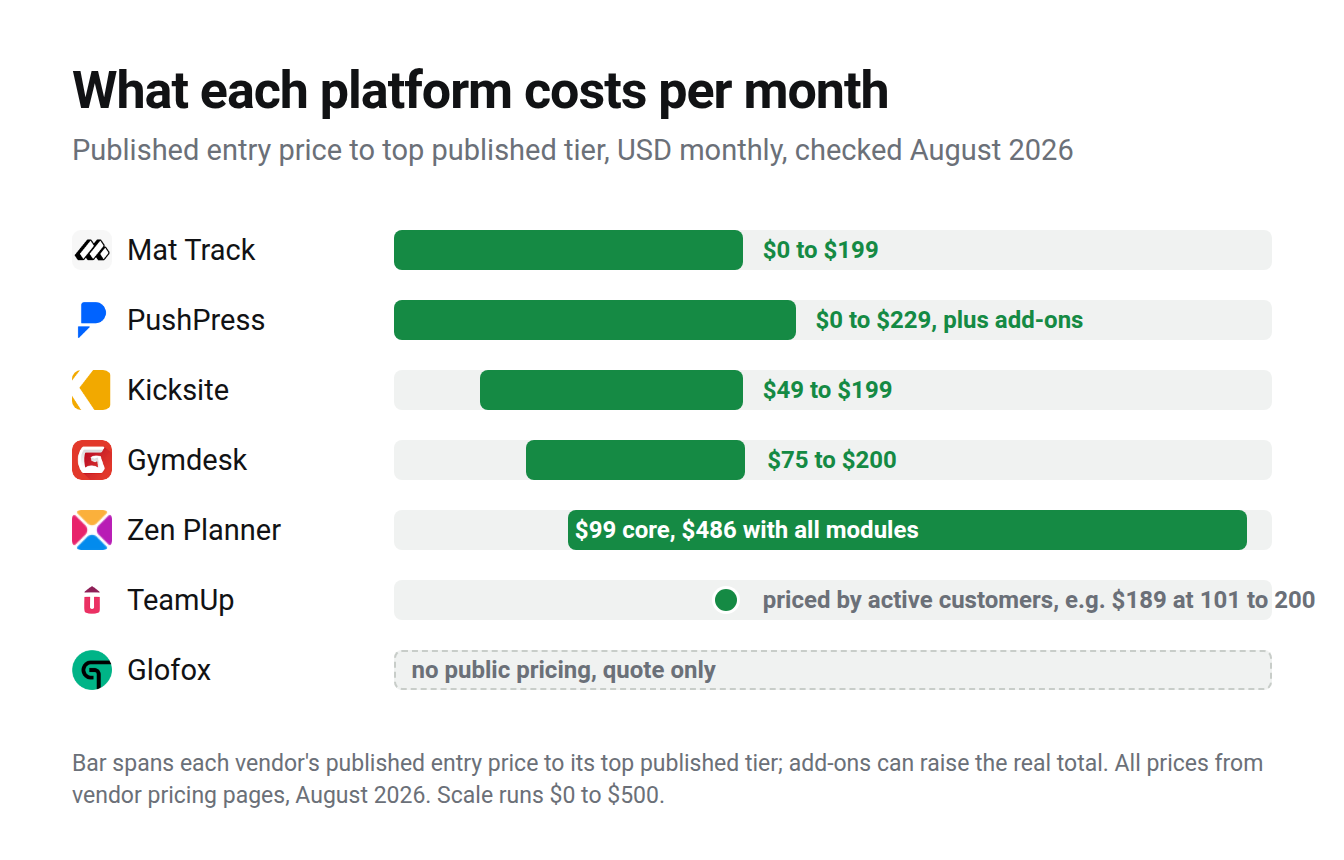
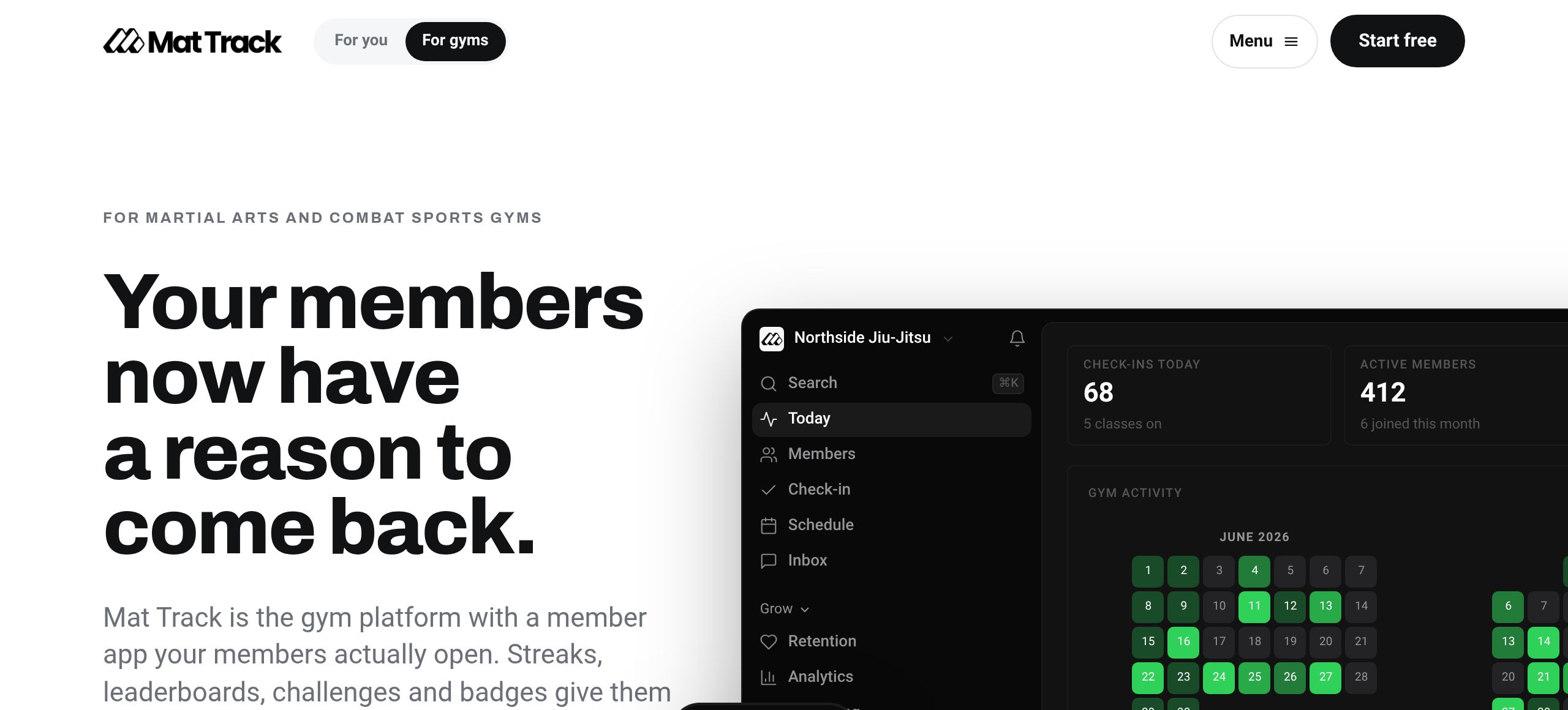
Mat Track is ours; judge accordingly. Starter at $49 a month for up to 100 active members, including day passes with QR entry, digital waivers and the member app; Growth $99 (adding retention analytics) and Pro $199 a month, a 7-day free trial, no platform transaction fees. The drop-in flow is the boxing case: pass bought, waiver signed, contact kept, follow-up automatic. The honest limitation is age: it is the youngest platform here, and there is no consumer marketplace bringing strangers to your door.
Where it wins:
- Day passes and digital waivers from the $49 Starter plan up, which is boxing's whole front door
- Attendance drives retention alerts against each member's own pattern (Growth and Pro)
- No platform transaction fees on any plan
Where it falls short:
- Youngest platform on the list, shortest track record
- No marketplace to bring in walk-ins
- No free plan; a 7-day free trial, then from $49 a month
Gymdesk, $75 to $200 a month by active members, is the simplicity pick: every feature at every tier, a website builder included, one predictable bill. For a small club that wants to stop running on paper this week, it is the shortest path.

Where it wins:
- Everything included at every tier, website bundled
- Fast setup, month-to-month billing
- Choice of payment processors
Where it falls short:
- Retention tooling is thin next to its booking tooling
- Price climbs with member count
- Member app is functional rather than habit-forming
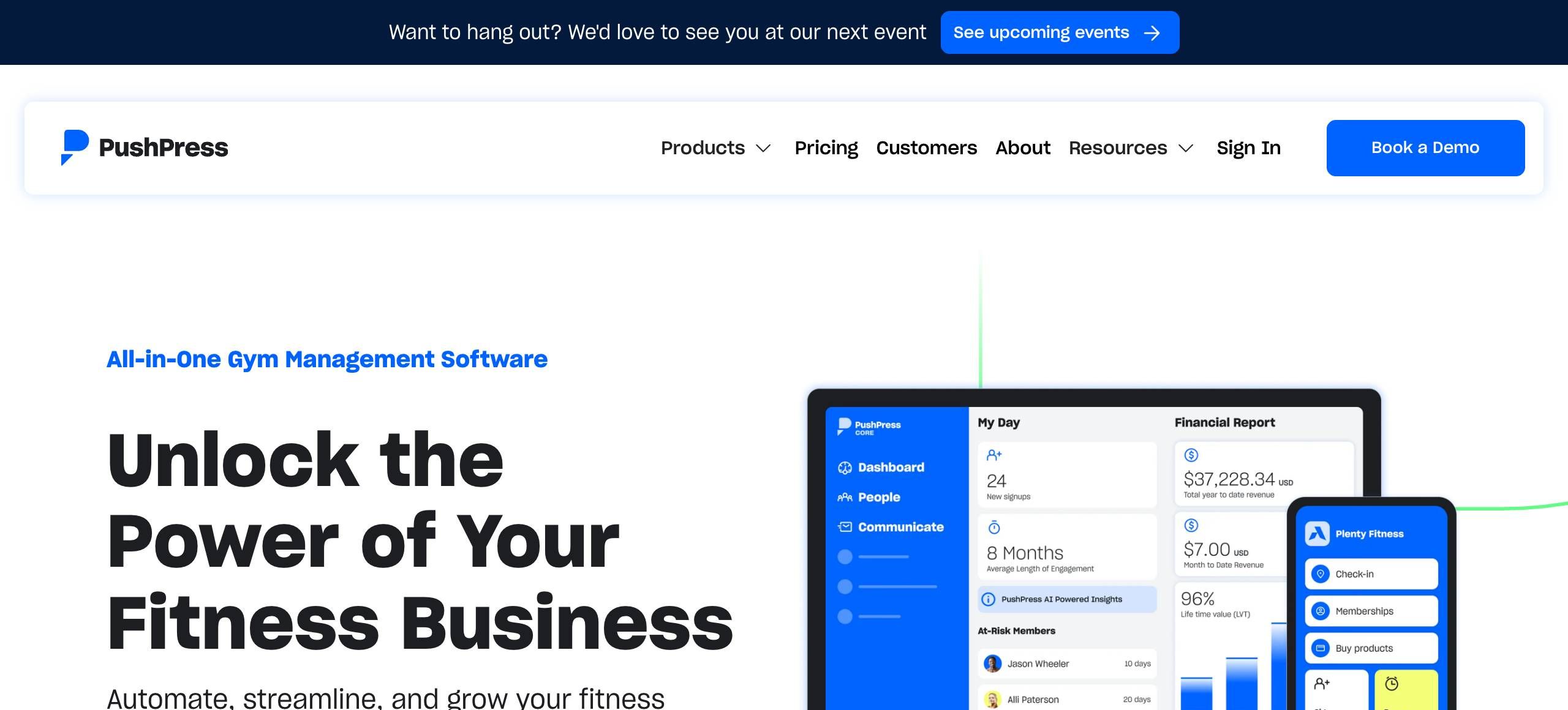
PushPress starts free with unlimited members, then Pro $159 and Max $229, with add-ons (training from $79, branded app from $81). Its class-pack DNA suits boxing-fitness businesses selling session bundles.
Where it wins:
- The free tier is real: no monthly fee, unlimited members
- Clean check-in flow that survives a busy evening
- Strong fit for class-pack and session-bundle pricing
Where it falls short:
- The pieces a fight gym wants sit in paid add-ons
- Configured price lands above most rivals here
- No amateur-club structures like squads or carding out of the box
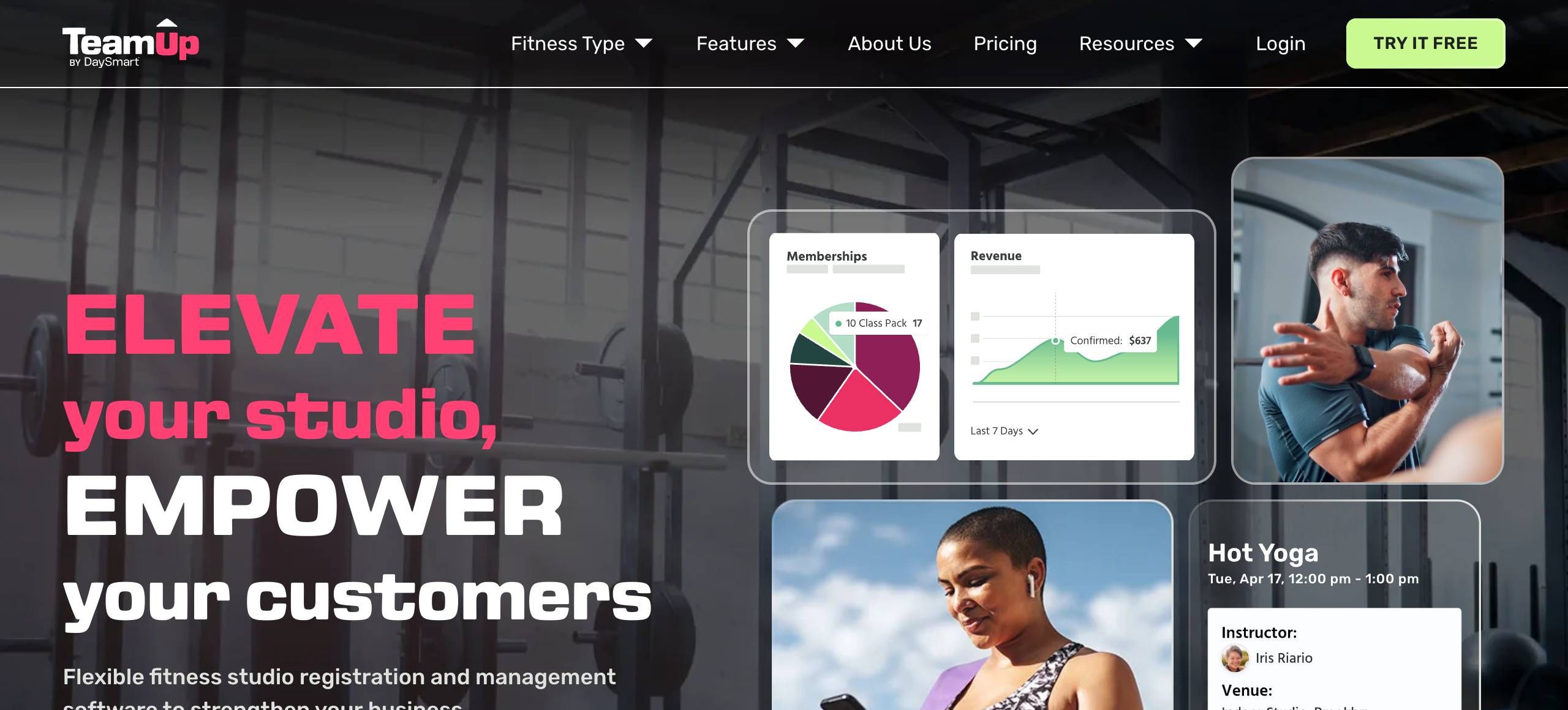
TeamUp prices by active customers, for example $189 a month at 101 to 200, with a branded app at $99 extra. Its booking experience is excellent and its GoCardless direct debit support makes it the strongest UK story, which matters in a country with a deep amateur boxing club culture.
Where it wins:
- Excellent booking experience, priced by actual active customers
- GoCardless direct debit, ideal for UK club subs
- Month to month, no setup fees
Where it falls short:
- Studio vocabulary; club structures need workarounds
- Branded app is a $99 monthly add-on
- Retention tooling is not its focus
Zen Planner, from $99 a month plus modules (website $99, marketing $249, branded app $39), has the deepest feature set here and suits larger multi-programme academies. Configure the real price before comparing: core plus the common modules passes $480 a month.
Where it wins:
- Real depth for large, multi-programme operations
- Staff and payroll features the simpler tools lack
- Proven at scale across coaching gyms
Where it falls short:
- Add-ons stack quickly toward $486 a month fully configured
- Heaviest setup and learning curve on this list
- Overkill for a single-room boxing club
Kicksite, $49 to $199 a month by student count, is the traditional martial arts veteran: simple, well supported, strong on families and gradings. Boxing clubs without belt structures use less of what makes it distinctive, but the price and support keep it on the list.
Where it wins:
- Cheapest paid entry here at $49 a month
- Two decades of martial arts club track record
- Simple enough to hand to a volunteer secretary
Where it falls short:
- Belt-and-grading centric; boxing uses less of its core
- Dated interface and thin member app
- Tops out early for clubs wanting automation
Glofox publishes no prices; quotes only, as of August 2026. It is boutique-studio software with a genuinely polished branded app, and boxing-fitness studios selling class packs fit it well. Traditional clubs with memberships, squads and amateur cards mostly do not.
Where it wins:
- The most polished branded member app in this list
- Built for boutique studios and class-pack selling
- Strong payments and lead-capture flows
Where it falls short:
- No public pricing; a sales call to learn the number, with reported costs well above the specialists
- Studio model; club structures fit awkwardly
- Contracts rather than month to month
How to choose software for a boxing club
A community or amateur club on subs and volunteers: start on PushPress's free tier or a 7-day free Mat Track trial (then $49 a month), and let the first paid month be a decision the numbers make. A small commercial gym that wants one simple bill: Gymdesk. A UK club living on direct debit: TeamUp. A boxing-fitness studio selling packs to professionals: Glofox or PushPress. A large academy running boxing alongside three other programmes: Zen Planner. Whatever you choose, run one real Friday night through the trial: a walk-in, a waiver, a day pass, a sub payment, and see which system kept up with the room.