
 Mat Track vs
  MAAT
MAAT
The MAAT alternative built for combat sports.
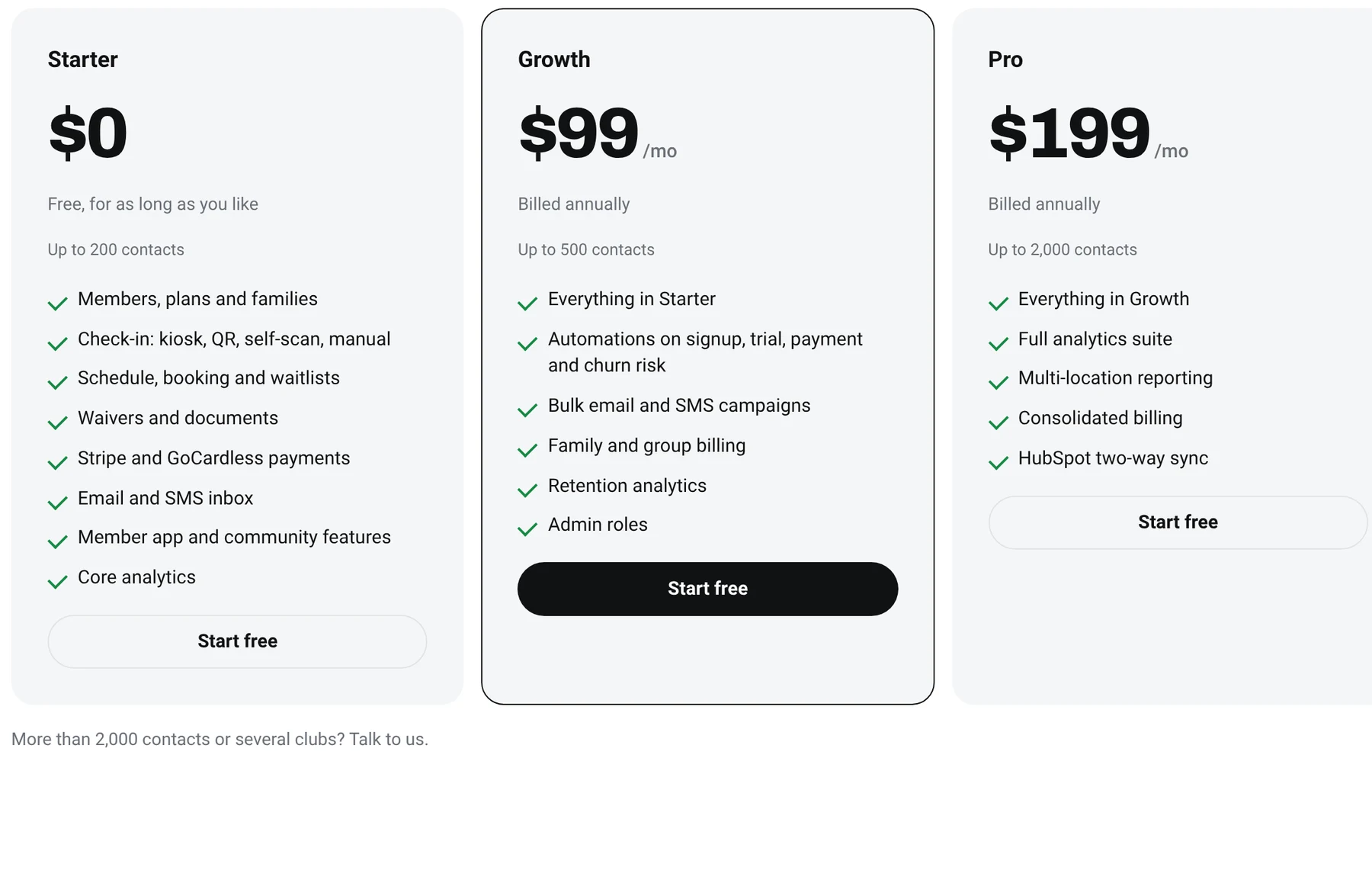
MAAT keeps it simple: one plan, $59 a month, unlimited members, plus 1% of your transactions. Mat Track agrees on simplicity and differs on two counts: a lower starting price, $49 a month, and never touching a percentage of your revenue.
Every figure on this page checked against MAAT's public pricing, August 2026.
The fair version first
What MAAT is, honestly
MAAT is martial-arts-specific software with a refreshingly flat offer: one Unlimited Plan at $59 a month, or $49 on annual billing, every feature included, unlimited members, cancel anytime. Its member app is widely used and simple enough that students need no training, and the whole product is aimed squarely at academies rather than general fitness. As pricing models go, it is one of the most honest in the market.
The 1% platform transaction fee, charged on top of Stripe's own rates, is the quiet second price: an academy collecting $8,000 a month pays MAAT $80 in fees on top of the $59 subscription, and the fee grows with your revenue forever. Mat Track charges no percentage on any plan, starts at $49 a month, and puts its energy into the retention layer, streaks, badges, alerts and comeback challenges, that MAAT's simpler app does not attempt.

Side by side
Mat Track vs MAAT at a glance
| Mat Track | MAAT | |
|---|---|---|
| Pricing and plans | ||
| Entry price | $49/mo, or $39/mo billed annually (up to 100 active members) | $59/mo, or $49/mo billed annually |
| Platform transaction fees | None | 1% of transactions (on top of Stripe's fees) |
| Member cap | 100 Starter, 250 Growth, 500 Pro (active members) | Unlimited |
| Contracts | Billed monthly, no contract | Month to month, cancel anytime |
| Member experience | ||
| Member app | Included: streaks, badges, leaderboards, community | Included, simple and widely adopted |
| Reasons to open it daily | Session logging, streaks, challenges, community feed | Attendance and account basics |
| Guest passes | Members share from the app | Not advertised |
| Retention and coaching | ||
| Retention alerts | Each member vs their own 60-day pattern | Not advertised |
| Comeback flows | Comeback challenges built in | Not advertised |
| Per-coach retention view | Yes | Not advertised |
| Martial arts fit | ||
| Built for martial arts | Yes | Yes |
| Belt and rank tracking | Multi-art ranks, criteria in the app | Attendance and student tracking; ranks not detailed on its pricing page |
| Public gym page | Your page on an 11,000-gym directory | Not offered |
| AI front desk | ||
| Marty AI Early access | Drafts replies to members' emails and texts, answers questions from your own records, and proposes Stripe refunds or cancellations. Staff approve everything. | No AI features found; automated reminders and failed-payment emails |
Sources: MAAT's public pricing page and Mat Track's pricing, both checked August 2026. AI features checked on MAAT's own site, 19 October 2026.
The maths
The worked example: what 1% adds up to
Take an academy of about 120 members collecting $8,000 a month through the platform. On MAAT the bill is $59 plus 1% of transactions, $80, so $139 a month and rising with every new member's payments: $1,668 a year at today's volume. On Mat Track the same academy pays $99 a month on Growth, $1,188 a year, with no percentage taken at any volume. Under 100 active members Mat Track Starter is $49, below MAAT's $59 before its fee is even counted. Flat fees and percentage fees look similar at small volume; they part company as you grow.
No percentage of your revenue, ever
MAAT's 1% rides on top of Stripe's own rate, so the platform earns more every time you do. Mat Track connects you to Stripe or GoCardless at their standard published rates and adds nothing: no percentage, no per-transaction fee, on any plan, Starter included. Your growth is yours.
An app with a daily pull, not just a check-in
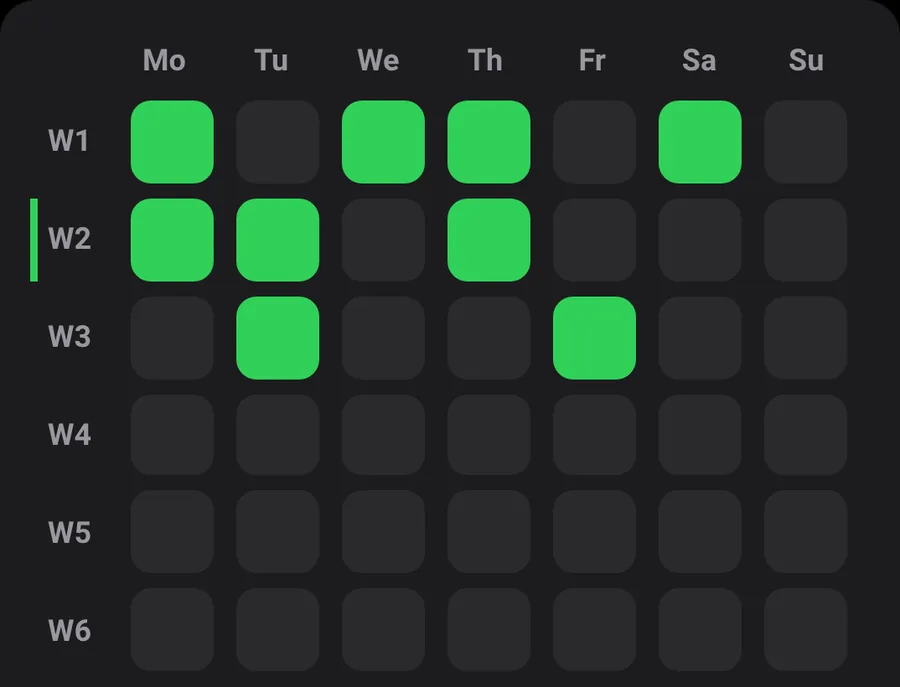
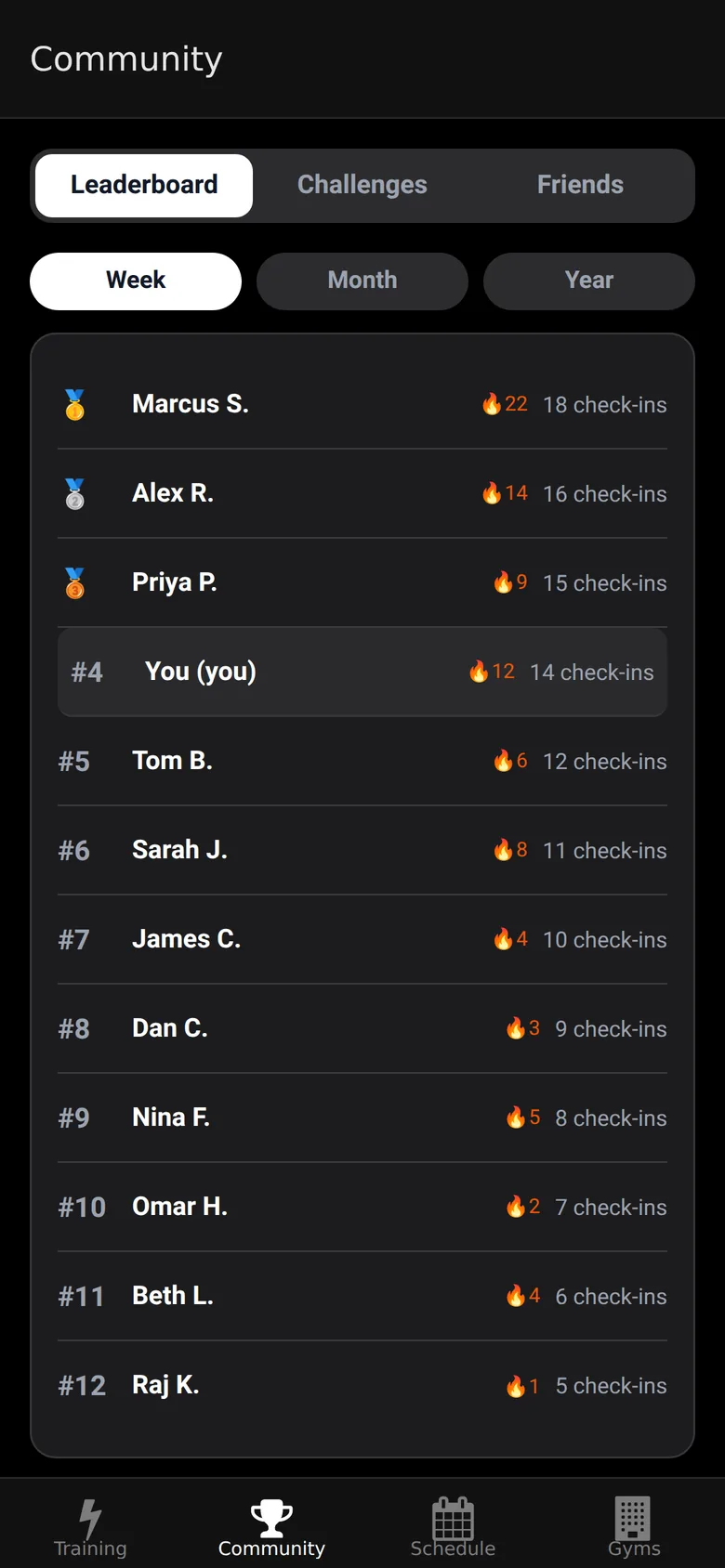
MAAT's app is simple and its students genuinely use it, which is more than many rivals manage. Mat Track's app aims higher than attendance: streaks members protect, badges at real milestones, leaderboards, challenges and a community feed, because the app that gets opened between classes is the one that keeps people training. The mechanism is laid out in our retention guide.

Retention as a feature, not a hope
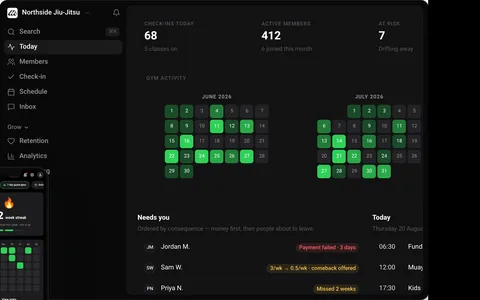
MAAT records attendance; what you do with a fading student is up to you. Mat Track watches each member against their own 60-day pattern, flags drops to the coach while a message still matters, and sends comeback challenges with a target attached. For a single-coach academy this is the difference between noticing in March and acting in January.
And Marty. The AI front desk that comes with Mat Track.
MAAT has no AI features on its site as of October 2026. Marty reads your inbox, checks Stripe and answers questions about your gym from your own records, then waits for your yes.
Rolling out to a few gyms at a time. Start free, then ask for Marty inside the app.
The rest of the toolkit
Also in Mat Track, so nothing is lost in the move
The front desk
- Kiosk and QR check-in. Members self-scan on the way in; the register fills itself.
- Class scheduling. Bookings, waitlists and capacity limits, synced to the member app.
- Digital waivers. Signed on a phone at the door, stored against the member, no paper.
- Guest passes. Members share a pass from the app, so trials walk in pre-registered.
The money
- Stripe and GoCardless billing. Cards and direct debits, with failed payments chased automatically.
- Family and group billing. One payer, several members, one invoice.
- Day passes and drop-ins. Paid at the door with QR entry and a waiver in the same flow.
- No platform transaction fees. You pay your processor's rate and nothing on top.
Keeping people
- Email and SMS inbox. Messages to members from the console, replies back in one place.
- Automations. Welcome sequences, missed-payment chases and comeback nudges on Growth and Pro.
- Multi-location reporting. Up to three sites on one screen, on Pro.
- Your page on the directory. A claimed profile on the 11,000-gym Mat Track directory, pointing searchers at your door.
Who moves
The gyms that switch from MAAT
The academy that grew into the 1%
At $3,000 a month of payments the 1% feels like nothing; at $10,000 it is $100 a month on top of the subscription, forever. Academies switch when the percentage outgrows the product.
The club under 100 members
MAAT's $59 is fair, but Mat Track's Starter is $49 for a club this size and keeps 100% of its payments. For a small academy the entire comparison is one line long.
The gym that wants retention handled
MAAT tracks who came in. It does not chase who stopped. Gyms wanting attendance-based alerts, streaks and comeback flows move to the platform built around them.
The part nobody else has
Practitioners in your area may already be on Mat Track
Mat Track is not just gym software; it is the app martial artists use to log their training, keep streaks and find somewhere to train on the 11,000-gym directory. That is a pool of active practitioners no other platform on this page can show you. Claim your gym's page and your timetable, trial offer and grading culture are in front of the people already searching your postcode.
Switching
What moving from MAAT looks like
- Export students, memberships and payment records from MAAT (ask support for CSV exports if not visible).
- Import into Mat Track, set up rank ladders, invite students to the app; payment consent is collected in the invite flow.
- Run both for one billing cycle, then cancel; MAAT is month to month with no exit fee.
The honest bit
When MAAT is the better pick
Pick MAAT if you want the simplest possible offer, one plan, unlimited members, month-to-month, and your payment volume is modest enough that 1% stays trivial. Its app's adoption among students is real, and unlimited members at $59 undercuts Mat Track's paid tiers for very large academies with low card volume. Comparing the whole market rather than just us? Our best MAAT alternatives roundup covers the field.
Frequently asked questions
Is Mat Track cheaper than MAAT?
Does MAAT have an AI assistant like Marty?
What is MAAT's 1% transaction fee?
What does MAAT have that Mat Track does not?
Does Mat Track match MAAT's simplicity?
Can I try Mat Track while still on MAAT?
More data-led comparisons from the same team: best muay thai gym software, best MMA gym software, best boxing gym software, Wodify vs PushPress and the retention guide behind our alerts.

Try the switch without the risk
7-day free trial, no card. Import your members, run one real week, and keep MAAT until you are sure. And practitioners already log their training on the Mat Track app; claiming your gym's page puts your timetable in front of them.
Questions about switching? WhatsApp or text us, straight to the team.